
If your T-money card does not work, step away from the gate, separate it from other contactless cards or your phone, and try the same card once on a different reader.
Then have the balance and last trip checked at a subway information desk or T-money retailer. The cause may be low balance, an incomplete trip, damage, or NFC interference.
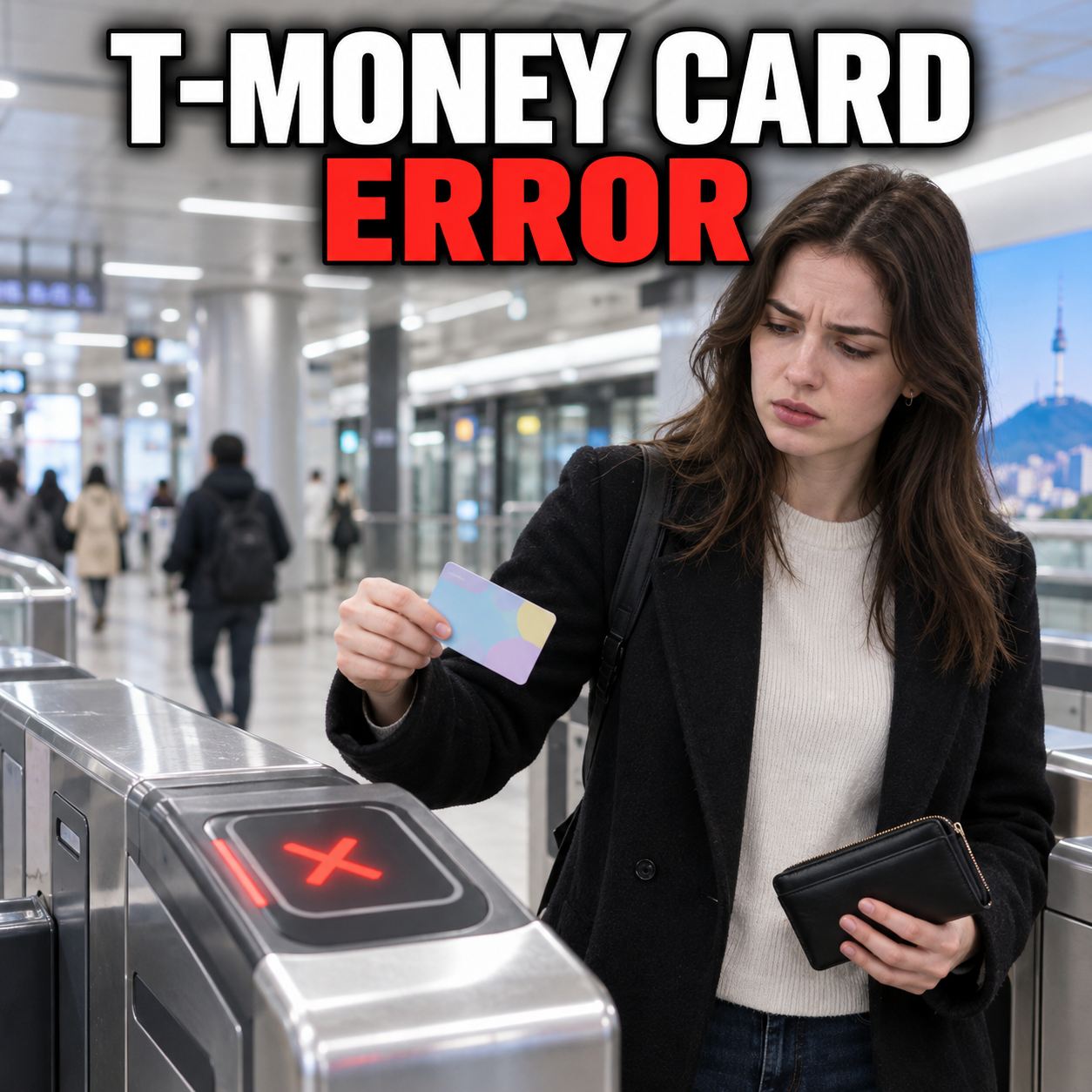
Read the gate or bus reader message before trying again
Pause after the first rejection and note the exact screen message, sound, location, and whether you are entering or exiting.
A red light can mean low balance, an unrecorded previous exit, a reader problem, or a damaged card. Move out of the passenger flow and photograph the message if permitted. Show it to the subway information desk or ask the bus driver before retrying.
Avoid repeated taps at the same reader
Repeated attempts make it harder to tell whether a fare was accepted. Check the display and ask staff to confirm the transaction before you add money or buy another ticket.
Isolate the card from NFC and contactless interference
Take the T-money card out of your wallet and hold only that card flat against the reader for a full second.
A bank card, hotel key, another transit card, or NFC phone can interfere. Test the physical card by itself. For mobile T-money, confirm NFC is enabled and temporarily disable competing transit apps. Seoul's official guide warns that using two or more public transportation apps can cause duplicate charges or transfer errors.
Check the balance and the card's last recorded trip
Ask a subway information desk or T-money retailer to check both the remaining balance and the latest entry or exit record.
If the balance is low, recharge after staff confirms it. The updated balance should allow one clean tap. Our T-money recharge guide compares store and station top-ups; the T-money visitor guide covers basic use.
If you forgot to tap when leaving a bus or encountered an open or failed subway gate, staff may need to inspect the trip record before the card can be used normally. Seoul's integrated fare rules require a tap when boarding and getting off, and transfer discounts depend on the recorded exit. Explain the previous route, approximate time, and station or bus number instead of guessing which trip is still open.
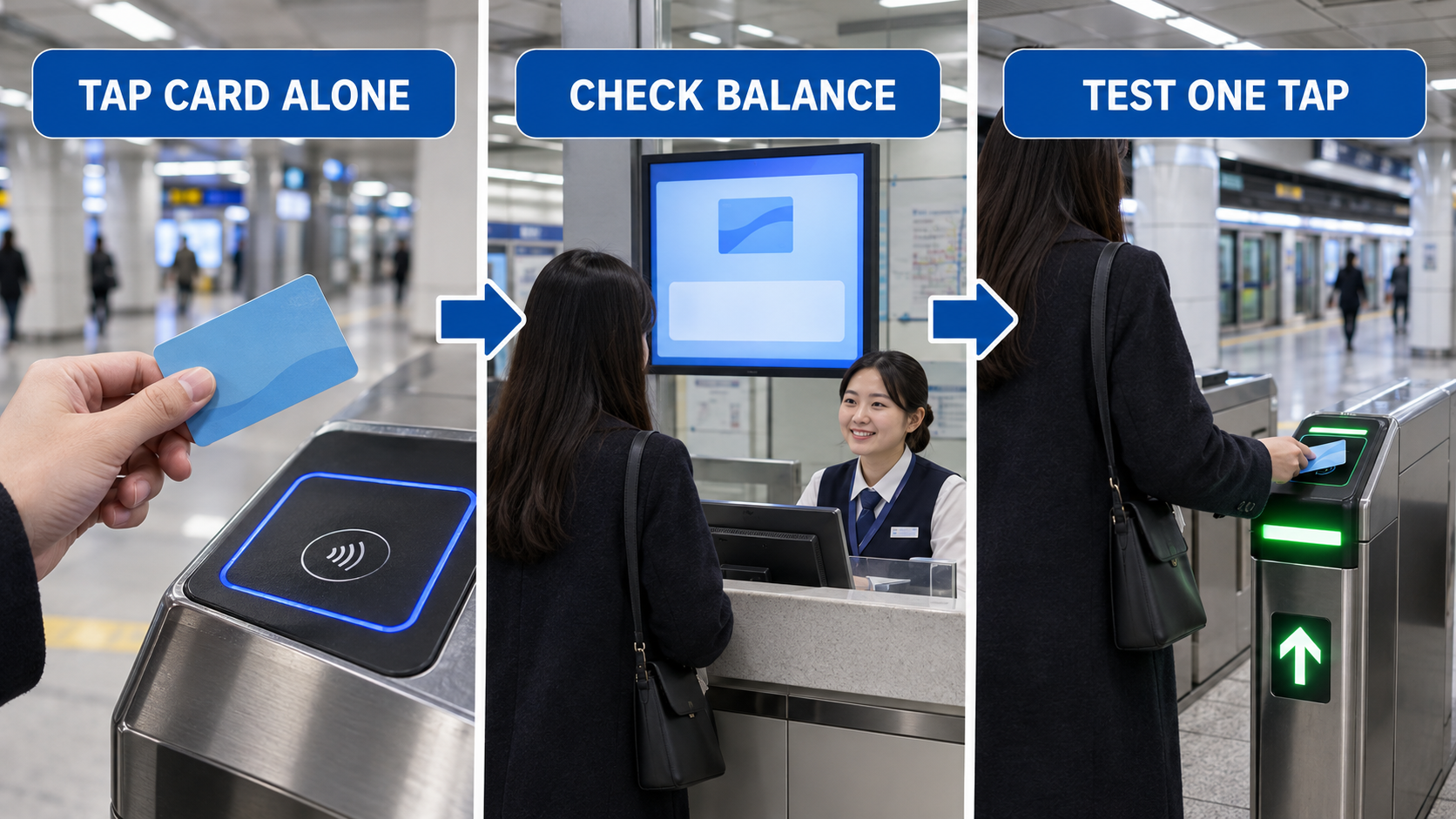
Use the correct recovery path for subway, bus, or mobile T-money
For a subway gate error, use the station desk; for a bus error, ask the driver; for a mobile-card error, check NFC and the active transit app before changing anything else.
At a subway station, use the information desk rather than following another passenger through a gate. On a bus, ask the driver whether to retry or use another accepted method. If you cannot identify the previous stop, our Naver Map English guide can help retrace the trip. For mobile T-money, verify NFC, the active card, and the single intended transit app before uninstalling or resetting anything.
Keep a simple backup for the next ride
After staff checks the failed card, keep enough cash or an accepted alternative payment method for one trip. A subway single-journey ticket is subway-only and cannot replace a transit card on a bus.
Handle a damaged card or unexplained charge without losing evidence
If the card fails on multiple readers, stop using it and ask an official T-money location how that specific card type can be checked, refunded, or replaced.
Do not bend, cut, heat, or discard the card. Keep the card, recharge receipt, and error photo. T-money's foreign-language guide routes balance refunds through eligible sales or top-up locations, but the process can depend on the card type, balance, and readability. Confirm the procedure before buying a replacement.
Confirm the fix with one controlled test
After the balance or trip record is corrected, test the card once at a staffed gate or on the next ride while watching the reader display.
Success means one accepted sound, one fare or balance update, and an open gate or confirmed bus tap. For transfers, tap out and then tap in within the official window. If the card still fails on two readers after staff confirms enough balance and a closed trip, use the official refund or replacement route.
Resolution check
- The card is tested by itself, away from other NFC cards.
- The balance and last trip record have been checked.
- One tap is accepted on a staffed or clearly working reader.
- No unresolved duplicate charge appears in the transaction record.
Get English-language help when the cause is still unclear
If station or retailer staff cannot resolve the problem, contact T-money through its official guide or use the Korea Travel Hotline for transportation interpretation support.
Prepare the readable card number, card type, balance, failure time and place, reader message, and last successful trip. The Korea Tourism Organization says 1330 can help international travelers with transportation inquiries and interpretation. Keep our Korea hotline guide offline, but reserve emergency numbers for real safety emergencies.
Why does my T-money card have money but still fail?
It may be interference, an incomplete trip, a reader fault, or damage. Test the card alone and have staff check its balance and trip record.
Can I tap the card while it stays inside my wallet?
It may work, but nearby contactless cards or an NFC phone can cause a collision. Remove the T-money card and present only that card when troubleshooting.
What if I forgot to tap off a bus?
Tell station or bus staff what happened and provide the route and approximate time. Transfer discounts rely on a recorded exit tap, so the last trip may need to be checked before normal use resumes.
Can a subway single-journey ticket be used on a bus?
No. Seoul's official guide says subway single-journey tickets are for subway travel only. Use an accepted bus payment method instead.
Where should I ask for a refund?
Start with an eligible T-money sales or top-up location and show the physical card. The exact route can vary with card type, balance, and whether the card remains readable, so confirm the current official procedure before surrendering it.
If it is still not working
Stop retrying the card. Ask a staffed subway desk or official T-money location to confirm the balance, last trip record, and card readability. If they cannot resolve it, contact official T-money support or call 1330 for transportation interpretation, then use a separate payment method for your next trip.
Checked on September 9, 2026 against the official T-money foreigner guide, Seoul Metropolitan Government public transportation guidance, and Korea Tourism Organization 1330 information. Card products and service procedures can change, so confirm the current route for your exact card.
댓글 쓰기